Returning to university
- Holly Busby
.jpg/v1/fill/w_320,h_320/file.jpg)
- Jan 22, 2021
- 4 min read
Updated: Jan 23, 2021
The UK has entered another lockdown, creating new rules for university students.
The Government has announced that students must not return to university unless they are doing a vocational course.
The Prime Minister announced new national restrictions on January 4th 2021 including the closure of school and college buildings.
January 4th Announcement:
· Students will not be able to return to university.
· Study from their current residence until at least mid-February.
· In person teaching will only take place for a small number of critical courses


Students who are returning have been advised to take an asymptomatic COVID test as soon as possible once they have returned to university, then to self-isolate for three days before taking another asymptomatic test.
Those who choose not to take the test will be asked to self-isolate for 10 days.
Thomas Bone says he will happily get a COVID test if it is as easy as it was in December.
He says, “Last time it was organised through the [university]” referring to last December when many universities offered two free asymptomatic COVID tests to every student.
Students were told that although “tests are not mandatory” every student was “strongly encouraged” to take the tests.
The testing period lasted from November 30th to December 8th, following government guidance that students have left university by December 9th if they tested negative.


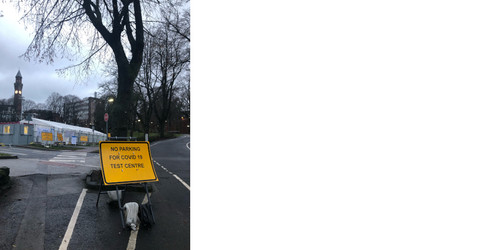
Students who tested positive were advised to isolate at university for the required 14 days and be able to return by December 24th at the latest.
Students were advised to book the two tests three days apart and to isolate in between the testing periods. This was to ensure accuracy of the tests. This is similar for students returning to university for this semester.
Worries that tests will not be as easy to come by such as in December 2020 have been vocalised but by looking at the University of Birmingham, it seems test centres are in place for students returning to easily get to.
Student Movement
Despite government advice, there has been a lot of movement from students to university from home.
Students moving back to university have said the reasons for ignoring government guidelines are because they are paying rent still, need to revise for exams or need the university study space.
Thomas Bone says, “I’m in my third year, so I’ve got exams I need to revise for now. My lectures start on the 25th of January as well so I’d much rather be in my [university] accommodation that I’m paying for rather than doing it from home in a tiny, little box room”
Many students did not go home for Christmas in the first place because they were worried about not being allowed back to university.
Therefore, some students have not got to spend time with their families since the summer of 2020 because of the rules for universities.
Philippa Gibson, who spent Christmas at university by herself, says, “I was too worried about the possibility that I wouldn’t be allowed back to university.
“I’m still having to pay for student accommodation, I can’t afford to let it go to waste.”
The government has advised students who feel they need to travel back to university that they should remain where they are and not travel to university.
However, you may return to university earlier if:
· Do not have access to appropriate alternative accommodation.
· Do not have the facilities such as internet connection.
· Do not have the studying space.
· You need to return for health and safety reasons.
If this is the case, it is advised that students speak to their university to find a solution which may include returning to university.
If students do return, they should get tested. If they choose not to, then students must isolate for ten days.
Travelling back to University
Students who have been told they can return to university can travel by either public transport or private transport.
To minimise risk of transmission to other, it is best to travel by private vehicle where possible.
When driving, only travel with people from your household or the household you will be living with once at university.
When travelling via public transport, it’s advised that people must rigorously follow the safety travel guidance for passengers.


To help control the virus you can:
· Wear a face covering unless exempt.
· Keep your distance from people from other households, where possible.
· Sanitise hands regularly.
· Avoid the busiest routes and times.
· Downloading the NHS COVID-19 app before you travel and checking in where you see official NHS COVID-19 QR code posters.
Accommodation Costs
Students must still pay for accommodation even if they are not living there, unless agreed otherwise.
However, some universities have offered refunds.
The University of Sheffield has said it will “refund undergraduates living in its residences” a total of £1million covering the final fortnight of term.
The University of Manchester has cut 30% of halls rent for the autumn term, after receiving pressure from students.
Bangor University is currently receiving rent strikes from students in university halls to try and get a refund for their accommodation after being asked not to return.
Although there may some positives for students living in university halls, there may not be the same outcome for students renting from private landlords as they are not part of the universities.
Thomas Bone does not expect to receive a refund for accommodation at any point saying, “The landlords are their own thing, they have nothing to do with the university.”
The National Union of Students (NUS) has urged the government to offer financial support to those prevented from returning in the New Year.
All higher education institutions have confirmed they are making sure all learners can access e-learning, for example, loaning laptops to students who do not have one at home.
If students have any concerns, it is best to contact the university. Support can then be provided where necessary.
By Holly Busby


Comments